

Giving lucky money during Tet (Vietnamese Lunar New Year) is a long-standing cultural tradition in Vietnam. However, in modern society, many people wonder how much lucky money is appropriate, so it remains meaningful while avoiding financial pressure. This article provides a complete A–Z guide to help you understand the tradition.
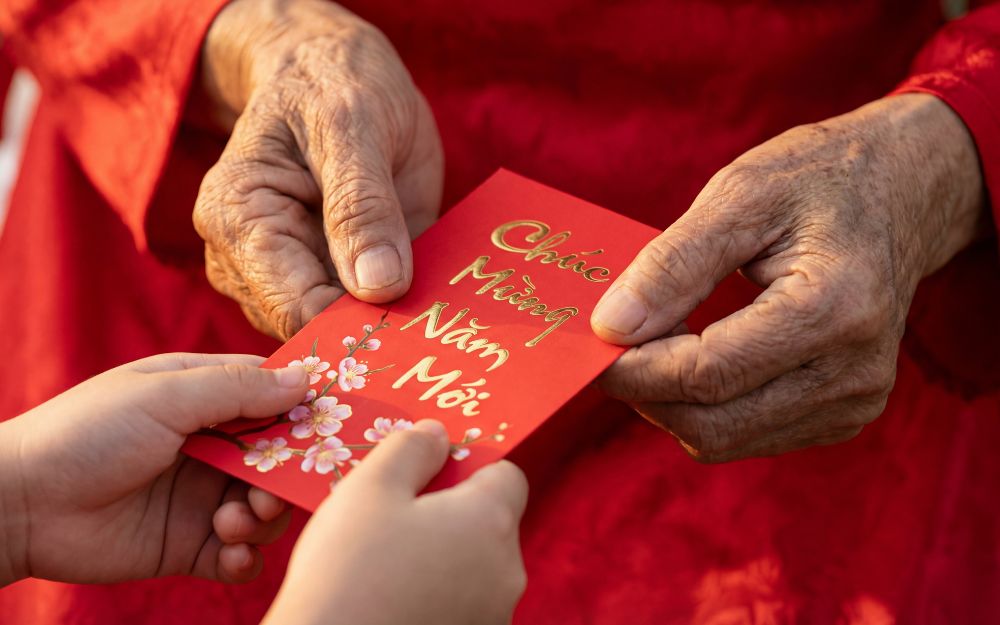
Lucky money (lì xì) is the custom of giving money in red envelopes along with good wishes at the beginning of the Lunar New Year. In traditional beliefs, lucky money symbolizes:
Good luck
Peace and safety
Wealth and prosperity
A positive and smooth start to the new year
The amount is less important than the sentiment and goodwill behind the gesture.
In Vietnamese tradition, giving lucky money represents:
Sending blessings for the new year
Strengthening family bonds
Wishing for a smooth, successful year ahead
For children especially, lucky money brings joy and creates cherished memories of Tet celebrations.
There is no fixed rule for the amount of lucky money. An appropriate amount depends on:
The relationship
Personal financial situation
Family traditions
Below are common reference amounts today:
From 20,000 – 50,000 VND: Common and suitable for most families
100,000 VND or more: Usually given to close relatives or immediate family
The envelope and kind wishes matter more than the amount, and comparisons should be avoided.
Mainly symbolizes wishes for health and longevity
Even numbers are preferred, representing completeness and abundance
Often accompanied by wishes for peace and prosperity
Depends on company culture
Intended as encouragement and good fortune for the new year
Monetary value is not the main focus
Many people care about the symbolic meaning of numbers when giving lucky money:
20,000 – 50,000 VND: A light, lucky beginning
68,000 VND: “Wealth and prosperity”
88,000 VND: “Double prosperity”
100,000 VND: Wholeness and abundance
Numbers associated with bad luck should be avoided according to traditional beliefs.
To avoid bad luck at the beginning of the year, keep in mind:
Do not use old, torn, or wrinkled bills
Avoid giving small loose change
Do not open the envelope in front of the giver
Avoid negative or unlucky words when giving lucky money
Lucky money envelopes are commonly:
Red: Symbolizing luck and happiness
Gold: Representing wealth and prosperity
Today’s envelopes come in modern and creative designs while still preserving traditional meanings.
In addition to traditional envelopes, digital lucky money via bank transfers or e-wallets has become increasingly popular. Regardless of the format, what matters most is:
Sincere wishes
Thoughtfulness when giving
Not turning lucky money into financial pressure
Is giving lucky money during Tet mandatory?
No. It is a voluntary cultural tradition.
Should working adults receive lucky money?
It depends on the relationship and circumstances; it is not mandatory.
Is giving lucky money via bank transfer acceptable?
Yes, as long as the meaning of good wishes is preserved.
So, how much lucky money is appropriate for Tet? The answer depends on your circumstances, relationships, and intentions. Lucky money is not merely about money—it represents blessings, sharing, and a beautiful cultural tradition that should be preserved across generations.