


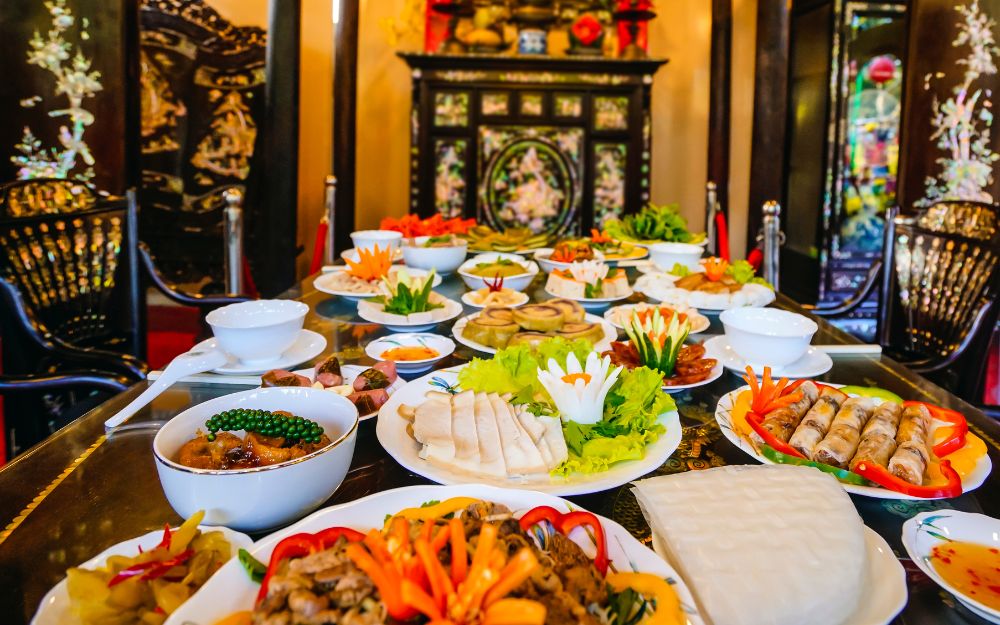
In Vietnamese culture, the Tet holiday feast is far more than just a New Year’s meal. It represents family reunion, respect for ancestors, and hopes for a prosperous and fulfilling year ahead. Over centuries of development, Tet holiday feasts in each region of Vietnam have taken on distinct characteristics, shaped by geography, history, and local lifestyles.
By exploring Tet feasts across Vietnam’s three regions, we gain not only insight into culinary differences but also a deeper understanding of Vietnamese cultural identity.
The Tet feast sits at the heart of Vietnamese New Year celebrations. It is where generations come together, where gratitude toward ancestors is expressed, and where wishes for peace, abundance, and good fortune are symbolically conveyed.
Traditionally, the Tet feast reflects harmony between yin and yang and the five elements. This balance is expressed through flavors, colors, textures, and the symbolic meanings of each dish.
Despite regional variations, Tet feasts across Vietnam share several common features. Dishes are carefully prepared in advance as a sign of respect and devotion, ensuring that the New Year begins with completeness and abundance.
A typical Tet feast includes sticky rice dishes (such as banh chung or banh tet), savory meat dishes, pickled vegetables for balance, and occasionally sweet treats. Together, these elements symbolize wholeness, harmony, and prosperity.
Northern Tet feasts are known for their traditional, formal, and structured nature. Dishes are thoughtfully selected and neatly arranged, reflecting reverence for ancestors and respect for long-standing customs.
Flavors tend to be mild and balanced, avoiding excessive sweetness or spiciness, in line with traditional culinary philosophy.
Banh chung is the centerpiece of the Northern Tet feast. Its square shape symbolizes the earth and is deeply connected to the legend of Prince Lang Lieu, representing gratitude toward heaven, earth, and ancestors.
Other essential dishes include Vietnamese pork sausage (gio lua), jellied meat, fried spring rolls, and pickled onions. Jellied meat suits the cold winter climate, while pickled onions help balance the richness of meat-based dishes.
The Northern Tet feast reflects discipline, family order, and respect for tradition. Each dish carries symbolic meaning, expressing wishes for unity, harmony, and abundance in the coming year.
Central Vietnamese Tet feasts are simple in appearance yet elaborate in preparation. This reflects the region’s historically harsh climate and challenging living conditions, which fostered a culture of frugality combined with careful attention to ritual propriety. Dishes are often seasoned more strongly and designed to last several days during the Tet holiday.
Banh tet is a staple of Central Vietnam’s Tet celebrations. Other common dishes include fermented pork rolls, tre, pickled vegetables (dua mon), and richly seasoned braised meats.
Each province offers its own variation. For example, Tet cuisine in Hue is known for its refinement and elegance, while regions such as Quang Nam or Binh Dinh favor more rustic yet flavorful dishes.
One defining feature of Central Vietnamese Tet feasts is their diversity. Even within the same region, preparation methods and presentation styles can differ significantly, highlighting strong local identities.
Southern Tet feasts are characterized by openness, abundance, and a strong emphasis on good fortune. The festive atmosphere of Southern Vietnam is clearly reflected in its food traditions.
Flavors tend to be richer, sweeter, and more indulgent, well suited to the region’s warm climate.
Banh tet remains central, often prepared with various fillings. Caramelized pork with eggs (thit kho tau) symbolizes fullness and prosperity.
Bitter melon soup (canh kho qua) carries a meaningful message—its name suggests that hardships will “pass,” expressing hope for a smoother year ahead. Sweet preserves and candied fruits (mut Tet) also play an important role in Southern Tet feasts.
Southern Tet dishes often rely on wordplay and symbolism to convey wishes for wealth, happiness, and good luck. The naming and selection of dishes reflect optimism and a forward-looking mindset.
While Northern Tet feasts emphasize tradition and formality, Central feasts highlight discipline and ceremonial balance, and Southern feasts celebrate generosity and joy.
Despite differences in flavors, ingredients, and presentation, Tet holiday feasts across Vietnam share a common purpose: honoring ancestors and strengthening family bonds.
In modern times, changing lifestyles have influenced how Tet feasts are prepared. Many families now opt for simpler menus or blend dishes from multiple regions.
Even so, the core values of the Tet feast remain unchanged. Regardless of form, the feast continues to symbolize unity, gratitude, and hope for the New Year.
Modern families can thoughtfully combine culinary elements from Northern, Central, and Southern Vietnam to create a Tet feast that honors tradition while fitting contemporary lifestyles.
More importantly, the Tet feast should serve as a space for togetherness, conversation, and connection—faithful to the true spirit of Vietnamese New Year celebrations.