

In Vietnamese traditional culture, Tet (the Lunar New Year) is not only a time for family reunions but also an important occasion to refresh the living space, welcome positive energy, and wish for a smooth and prosperous new year. Along with cleaning the house and decorating with flowers, Tet decorative plants play a significant role in both aesthetics and feng shui.
Each type of Tet plant carries its own distinct feng shui meaning, closely associated with wishes for wealth, health, peace, and success. Understanding the feng shui symbolism behind each plant helps families choose the most suitable one for the New Year.
According to feng shui beliefs, green plants represent vitality, growth, and positive life energy. Displaying feng shui plants during Tet is believed to:
Activate positive energy at the beginning of the year
Create a fresh, harmonious atmosphere in the home
Express wishes for wealth, good luck, and smooth progress
Enhance home décor and strengthen the festive spirit of Tet
For this reason, many families today choose Tet plants not only for decoration but also for their feng shui significance.
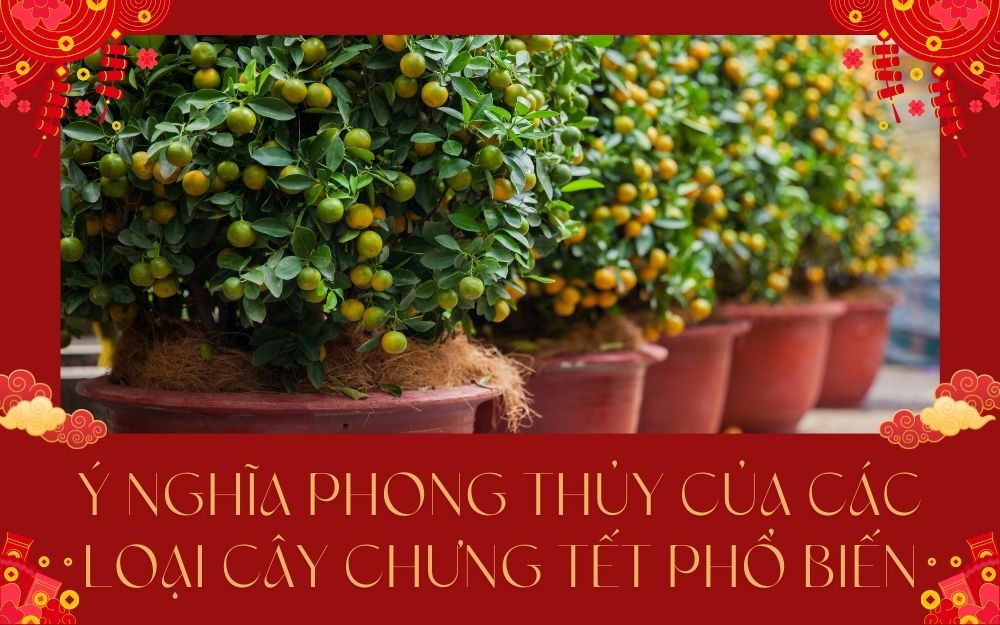
The kumquat tree is one of the most popular Tet decorative plants in Vietnam. A kumquat tree full of fruits, with lush green leaves and bright orange-yellow fruit, symbolizes abundance, completeness, and prosperity.
In feng shui, kumquat fruits represent achievements and successful outcomes, while the golden color symbolizes wealth and fortune. The green leaves signify vitality and long-lasting growth.
Kumquat trees are commonly displayed in:
Living rooms
In front of the house
Shops and business premises
with the hope of welcoming wealth and good fortune at the very beginning of the year.
The yellow apricot blossom is a distinctive symbol of Tet in southern Vietnam and is considered a plant with strong auspicious energy. The yellow color of the flowers represents wealth, prosperity, and noble fortune.
In feng shui, apricot blossoms also symbolize:
Resilience and perseverance
A positive and smooth new beginning
Long-lasting prosperity
An apricot tree blooming during Tet is regarded as a good omen, signaling a lucky and successful year ahead. Apricot trees are often displayed in living rooms, courtyards, or open, well-lit spaces.
For families in northern Vietnam, the peach blossom tree is an indispensable Tet symbol. According to traditional beliefs, peach blossoms have the power to ward off negative energy and protect the household.
The soft pink color of peach blossoms symbolizes:
Growth and renewal
Peace and happiness
Family harmony and warmth
Peach blossom trees are typically placed in living rooms or near the main entrance to welcome positive energy and create a warm, joyful atmosphere during Tet.
True to its name, the money tree is one of the clearest symbols of wealth, financial success, and prosperity. The plant’s upright growth and glossy green leaves represent continuous development and expansion.
In feng shui, the money tree is believed to:
Attract financial luck
Support business and investment success
Create a sense of abundance and stability
It is especially popular for display during Tet in living rooms, offices, shops, and near cashier counters.
The lucky bamboo, often referred to as the fortune plant, symbolizes growth, success, and smooth progress in work and life. Its name alone reflects wishes for development and good fortune in the New Year.
This plant is commonly displayed in:
Homes
Offices
Shops and business spaces
It is also favored because it is easy to care for and suits various interior styles.
Poinsettias are especially popular during the year-end and Tet season, particularly in families with children or students. In Vietnamese culture, poinsettias are associated with academic success, achievement, and joyful milestones.
The bright red leaves symbolize:
Good luck and celebration
Success and positive outcomes
A vibrant and promising new year
Poinsettias are often placed in living rooms or common family areas to spread positive energy.
In addition to the plants mentioned above, many families also choose other feng shui plants for Tet, such as:
Aglaonema (Phú Quý plant) – symbolizes abundance, comfort, and peace
Snake Plant – represents protection and the ability to ward off negative energy
Money Tree (Pachira aquatica) – symbolizes wealth and growth
These plants are usually compact and suitable for townhouses and apartments.
While feng shui is important, it should not be applied too rigidly. When choosing plants to display during Tet, it is best to:
Prioritize healthy, vibrant plants
Choose plants suitable for the size and layout of your home
Balance feng shui meanings with personal taste
A beautiful, well-maintained plant always brings positive feelings and good energy to the household.
Avoid displaying wilted, damaged, or unhealthy plants
Do not place plants in areas that block walkways
Avoid dark or poorly lit locations
Water and clean plants regularly
Continue caring for the plants after Tet to maintain positive energy
Each Tet decorative plant carries its own unique feng shui meaning, reflecting wishes for wealth, peace, health, and success in the New Year. Choosing the right plant not only enhances the beauty of your home but also brings a sense of comfort, optimism, and positive energy during the first days of the year.